
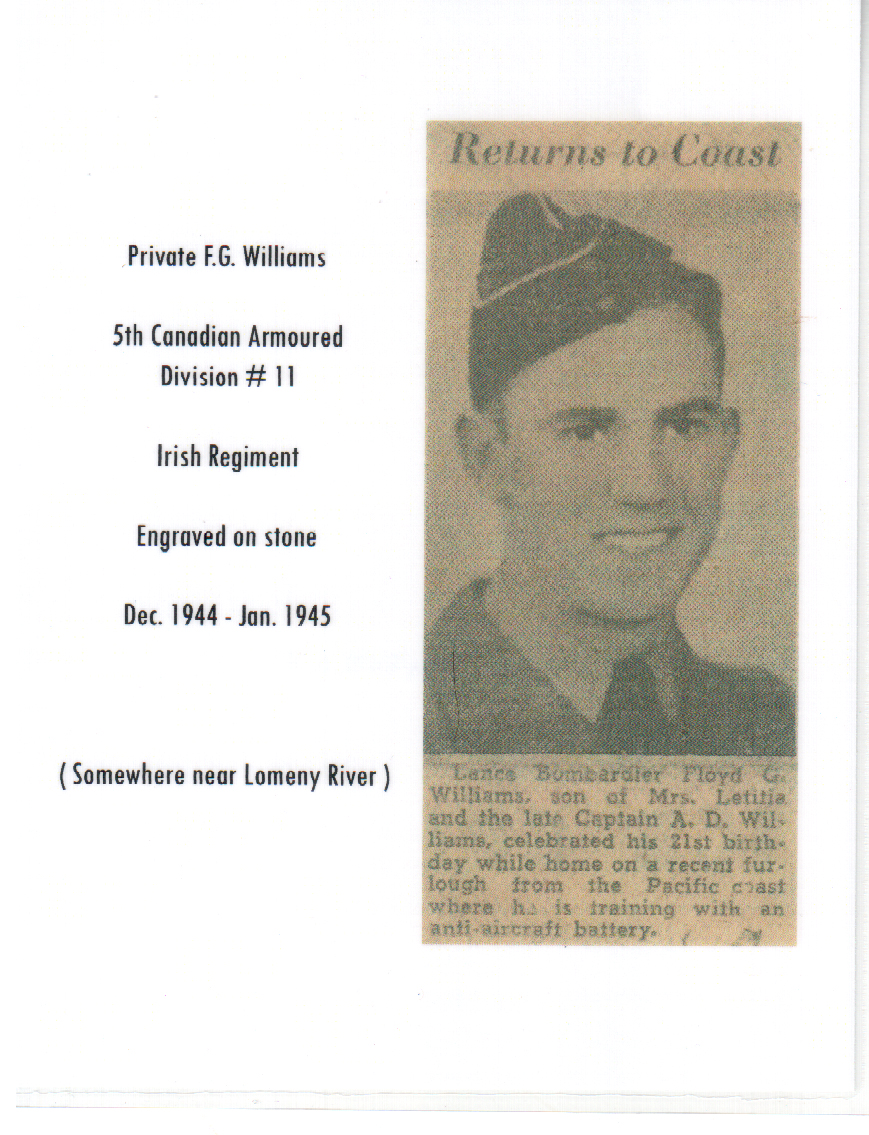
WILLIAMS Private Floyd George - D/142981
C Company - Irish Regiment of Canada, R.C.A.C.
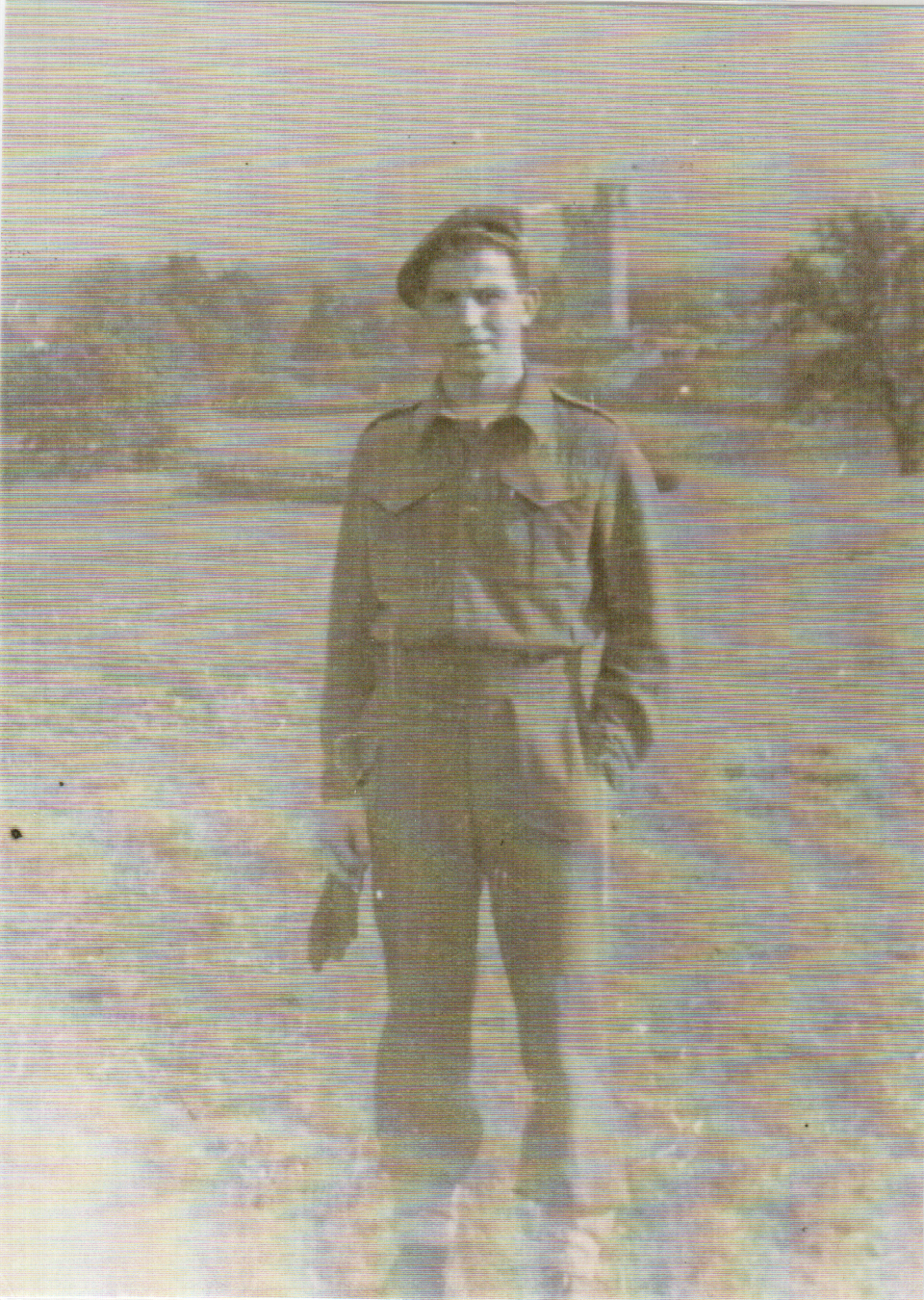
Floyd George Williams was born in Sarnia, Ontario, on March 9, 1922, the fourth of six children: five boys and one girl. His father, Arthur, was a military man who had served in the U.S. Army during the Spanish-American War in 1898 and later in the Great War, achieving the rank of Captain in the 34th Battalion of the Royal Canadian Regiment. He served until December 1917 when severe injuries rendered him unfit for active duty.
After Arthur’s death in May 1941, the family’s responsibilities fell entirely on Floyd’s mother, Letitia. Floyd and his older brother Fred decided to enlist in the Canadian Army, preparing to face the war together. They enlisted in Petawawa on August 24, 1942. Determined, ambitious, and full of enthusiasm, Floyd had previously attempted to join the Royal Canadian Air Force (RCAF) at the outbreak of the war but was rejected for being too young.
In civilian life, before his enlistment, Floyd worked as a clerk in a store. On April 23, 1943, he married Norine Demery from Sarnia.
After completing training in Canada, Floyd and Fred departed for England on August 4, 1944, where they stayed for a few months before being sent to Italy. Floyd landed in southern Italy on November 4, 1944, and was quickly sent north, where intense fighting was underway. Fred was delayed, and upon his arrival, he sadly learned of his brother’s death.
Floyd was killed on January 2, 1945, as his battalion advanced to cross the Lamone River near Conventello.
From the regiment’s diary: “San Alberto – January 2, 1945 – Weather: cold and clear At midnight on January 2, the battalion was transported from Ravenna to Mezzano, then marched to the designated point. At 0500, C Company on the right and D Company on the left moved towards the ditch under a barrage that lasted over ten minutes. C Company, commanded by Capt. Tony Falzetta, came under heavy artillery fire almost immediately, suffering many casualties. D Company, led by Maj. Norm Hickling, reached its initial objective, a group of houses, and secured it. They captured four prisoners and enemy weapons. C Company, after a temporary disarray, reorganized and reached another group of houses, encountering strong resistance. They consolidated their positions, inflicted losses on the enemy, and captured ten prisoners. Fighting, which began at 0500, continued unabated until 1800. In one of these brutal house-to-house battles between Allied and German forces in the Conventello area, Floyd was killed. The regiment suffered significant losses: 8 killed in action and 17 wounded.”
The news of Floyd’s death shattered the dreams of his mother and wife, Norine. Floyd was buried in the Villanova War Cemetery, Plot 2, Row A, Grave II, but the family was not initially informed of the exact location. Some communications referred to “a military cemetery #11 near the Lamorie River in Ravenna, Italy” or “somewhere near the Lomeny River.”
Thanks to the efforts of Donna Maxwell, the Williams family finally learned Floyd’s exact burial site. In the summer of 2009, over sixty years later, his nephew Paul Williams and his wife Paula were able to visit Floyd’s grave, paying their respects with deep emotion.
A photo shows many young men from Sarnia stationed in Vancouver for anti-aircraft battery training, with Floyd Williams standing second from the left.
Many players from the Sarnia football team, which Floyd was part of, enlisted in the Army. Those who were fortunate enough to return home gave their love and support not only to their own families but also to the families of their fallen comrades.

Following Floyd’s death, a Sarnia newspaper published a heartfelt article that included a letter written to Mrs. Letitia Williams by a fellow soldier, W.E. LeRoy, whose life Floyd had saved.
Over months of serving together in the regiment fighting in Italy, Floyd and LeRoy became close friends. In early January 1945, they were caught in prolonged action during which LeRoy was gravely wounded, and Floyd lost his life. The group had been moving from one house to another, a hundred meters apart, under intense enemy fire when LeRoy was shot in the stomach and arm.
“I wasn’t dead, but I couldn’t get up,” LeRoy wrote. “Floyd and the others were fine and kept running towards the house. I had given up hope of being saved when I saw Floyd turn around. I think he realized I had been hit because, a moment later, he was running towards me. I tried to shout at him to get to safety, but my voice was only a whisper. Even if I had been able to yell, I doubt he would have listened; bombs were exploding all around us. When he reached me, I told him to go away, but he ignored me. He got me to my feet and dragged me to the house. I don’t know how he managed, but he did. I was laid on a mattress, and Floyd helped dress my wounds. That was the last time I saw him. The unit moved forward, and I was taken to a hospital. You can imagine how I felt when I learned Floyd hadn’t made it back. I will never forget the sight of him running across that field to rescue me. People like him never truly die, Mrs. Williams. Perhaps they live only in the memory of those who knew them, but they live.”
In April 2009, Ian Flanagan, a Canadian student visiting Villanova Cemetery with his hockey team, left this letter at Floyd Williams’ grave:
Dear Floyd Williams, I would like to thank you for your contribution to our country and let you know that you are not forgotten. There are many, including myself, who wish you could have returned home safely. It is with pride that I write this letter, knowing that every day soldiers like you fully embodied the spirit of this great nation. Thanks to you, we have a true understanding of what a Canadian hero means. You were a very brave man who fought for our freedom, risking your life to protect us and save our country. For that, I am grateful. Thank you for your courage and for everything you did for us—students, mothers, and fathers. My deepest gratitude for protecting our freedoms.
Sincerely, Ian Flanagan